Inventors Sheds: Where Garden Ideas Become World-Changing Innovations
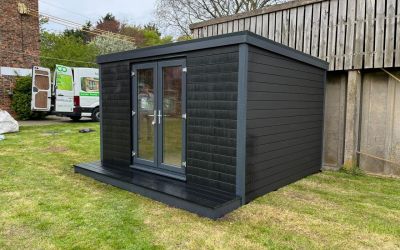
Garden sheds have long been a familiar feature in homes across the UK and beyond. Traditionally associated with storing garden tools, lawnmowers, and household equipment, sheds have steadily evolved into something far more purposeful. Today, they are increasingly recognised as powerful spaces for creativity, focus, and innovation. One of the most exciting transformations is their use as Inventors Sheds—dedicated environments where ideas are developed, tested, refined, and brought to life.
An inventors shed provides a quiet, affordable, and flexible workspace that allows innovators to think freely without distraction. Removed from the noise of daily life yet close to home, a garden shed offers the ideal conditions for experimentation and problem-solving. For inventors, engineers, designers, and tinkerers, these humble buildings have become incubators for some of the world’s most influential ideas.
This article explores why people feel driven to invent, the far-reaching impact inventions have on society, and why inventors sheds remain such fertile ground for innovation. We’ll also look at famous inventions and globally recognised companies that began life in garden sheds, garages, and improvised workshops—proof that big ideas often start small.
Inventing is deeply rooted in human nature. From the earliest tools to modern technologies, people have always sought better ways to solve problems, improve efficiency, and enhance quality of life. Invention is driven by curiosity, frustration, imagination, and the desire to make things work differently—or better—than before.
People invent for many reasons. Some are motivated by financial reward, recognising a gap in the market or a commercial opportunity. Others are driven by personal need, creating solutions to problems they encounter in everyday life. For many inventors, the biggest reward is not money but the satisfaction that comes from turning an idea into something functional, useful, or transformative.
Inventors Sheds provide a perfect environment for this kind of creative thinking. Free from formal constraints and expensive facilities, a shed allows experimentation without pressure. Mistakes become part of the process, ideas evolve organically, and innovation feels accessible rather than intimidating.
The impact of inventions on society cannot be overstated. They have reshaped how we live, work, travel, communicate, and stay healthy. Inventions have extended life expectancy, increased productivity, improved safety, and unlocked entirely new industries. Behind every major technological advancement is an individual or small team working persistently to refine an idea—often in modest surroundings.
Throughout history, inventors working in sheds have changed the world. One of the most iconic examples is the hovercraft. In 1955, British engineer Christopher Cockerell developed the first hovercraft prototype in his garden shed in Norfolk. Using everyday equipment, including a vacuum cleaner motor, Cockerell demonstrated that air could be used to lift vehicles off the ground. His invention redefined transport, enabling travel over land, water, mud, and ice. Today, hovercraft are used globally for military operations, rescue services, and commercial transport.
Another remarkable invention born in an inventors shed is the vacuum cleaner. In 1901, Hubert Cecil Booth created the first powered vacuum cleaner in his shed in Gloucester. His design eliminated the labour-intensive task of manual cleaning and laid the foundation for a household appliance now found in millions of homes worldwide. Booth’s innovation fundamentally changed domestic life and hygiene standards.
Inventors sheds have not only produced individual inventions but also launched companies that grew into global powerhouses. Perhaps the most famous example is Apple. In 1976, Steve Jobs and Steve Wozniak assembled the first Apple computers in a garage—an environment functionally similar to an inventors shed. That humble workspace became the starting point for a company that transformed personal computing, music, and communication worldwide.
Another iconic success story is Dyson. British inventor James Dyson began experimenting with cyclonic vacuum technology in his inventors shed in Bath in the late 1970s. Frustrated with traditional vacuum cleaners losing suction, he set out to redesign the mechanism entirely. After thousands of prototypes, Dyson succeeded. Today, the Dyson brand spans vacuum cleaners, fans, hair technology, and air treatment products, operating in markets across the globe.
Inventors sheds have also played a role in extraordinary engineering breakthroughs. In 1936, Sir Frank Whittle developed the first prototype jet engine in his workshop—effectively an inventors shed in Rugby. His work revolutionised aviation, enabling high-speed, long-distance flight and shaping modern air travel.
Design innovation also flourished in sheds. Sir Alec Issigonis designed the original Mini in a small working space in Surrey in 1959. The compact, efficient vehicle became a symbol of British engineering and remains an automotive icon to this day.
Business innovation has similarly thrived in shed environments. 3M, now a multinational corporation, began in 1902 when five entrepreneurs started Minnesota Mining and Manufacturing in a small workshop. Their early products evolved into thousands of innovations, from adhesive tapes to medical supplies.
More recent examples highlight the continued relevance of Inventors Sheds. Shaun Pulfrey developed the Tangle Teezer hairbrush in a garden shed in South London in 2007. Designed to detangle hair without damage, the product became an international success and transformed the haircare industry.
The Raspberry Pi is another modern shed-born innovation. Developed by a team of computer scientists in Cambridge, early versions were assembled in a modest garden shed environment. The Raspberry Pi has since become one of the most influential educational computing platforms in the world, used in schools, universities, and hobbyist projects globally.
These stories demonstrate a common pattern: inventors sheds offer freedom. They provide an affordable, adaptable space where curiosity can lead the process rather than budgets or bureaucracy. Unlike corporate labs, sheds encourage risk-taking and experimentation.
From a practical standpoint, inventors sheds are highly versatile. They can be customised with workbenches, storage, power, lighting, and ventilation to suit mechanical, electronic, or digital projects. Their proximity to home allows inventors to work flexibly, often fitting innovation around everyday life.
Perhaps more importantly, an inventors shed represents psychological freedom. Stepping into a shed dedicated to invention signals creative time. It encourages persistence, routine, and deep focus—qualities essential for breakthrough ideas.
In today’s world, where innovation is increasingly driven by individuals and small teams rather than large institutions, inventors sheds are more relevant than ever. From sustainable technologies to software, robotics, and product design, the next generation of breakthroughs may well begin in gardens rather than laboratories.
In conclusion, the garden inventors shed has proven time and again to be a powerful catalyst for progress. From hovercraft and jet engines to global technology brands and household innovations, sheds have played a central role in shaping the modern world.
Inventors sheds offer seclusion, flexibility, affordability, and creative freedom—qualities essential to innovation. As challenges grow and opportunities expand, these humble garden spaces will continue to inspire thinkers, builders, and pioneers. The next world-changing idea may already be taking shape in an inventors shed somewhere, quietly evolving before making its mark on society.
If you would like to talk to a member of our friendly staff about our garden sheds, we would be very happy to hear from you. You can call us free on 0800 170 1272 Monday To Friday 9.00am to 5.00pm.