What Is a Composite Garden Shed? Benefits, Materials & Uses Explained
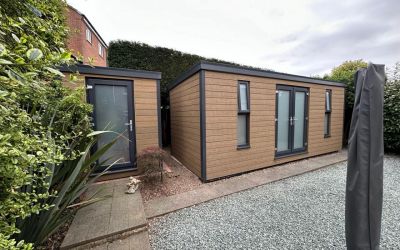
The question what is a composite garden shed is one increasingly asked by homeowners looking for a modern, long-lasting, and low-maintenance alternative to traditional wooden sheds. As garden buildings evolve from simple storage units into fully insulated, multi-purpose spaces, composite garden sheds have emerged as one of the most advanced solutions available.
A composite garden shed combines structural timber framing with external composite cladding materials to create a building that delivers exceptional durability, weather resistance, security, and visual appeal. Unlike conventional wooden sheds that require regular treatment and maintenance, composite sheds are designed to last for decades with minimal upkeep.
This article explains exactly what a composite garden shed is, how it differs from timber and metal sheds, how it is constructed, and why it has become the preferred choice for modern garden living.
What Is a Composite Garden Shed?
A composite garden shed is a garden building constructed using a traditional timber structural framework that is externally clad with composite materials rather than untreated timber boards.
The term “composite” refers to engineered cladding boards manufactured from a blend of recycled hardwood fibres, polymers, and bonding resins. This combination creates a highly stable, moisture-resistant, insect-proof, and low-maintenance exterior finish.
Internally, composite garden sheds are often fully insulated and lined, allowing them to be used year-round. The result is a building that retains warmth in winter, stays cool in summer, and remains dry, mould-free, and structurally sound.
In short, when asking what is a composite garden shed, the answer is: a premium, modern garden building designed to outperform traditional sheds in every key area.
How Composite Garden Sheds Are Constructed
Composite garden sheds are built using robust construction techniques more commonly associated with residential buildings than basic storage sheds.
Timber frame structure: At the core of a composite garden shed is a heavy-duty timber frame. Walls are typically built using 75mm or thicker structural-grade timber, while floors use deeper joists to support heavier loads.
External composite cladding: The outer walls are clad with composite boards rather than timber planks. These boards do not warp, rot, or absorb moisture and retain their colour and finish for decades.
Breathable membranes: High-performance waterproof breathable membranes are wrapped around the structure. These prevent water ingress while allowing moisture vapour to escape, reducing condensation and damp issues.
Insulation: Many composite garden sheds include thermal and acoustic insulation within the walls, roof, and floor, allowing comfortable use throughout the year.
Internal lining: Internally, walls are often lined with OSB or similar structural board, providing strength, insulation benefits, and the ability to securely fix shelving or equipment.
What Makes Composite Different From Traditional Timber Sheds?
Understanding what is a composite garden shed also means understanding how it differs from conventional timber garden sheds.
Maintenance: Timber sheds require regular painting, staining, or sealing to prevent rot, decay, and insect damage. Composite sheds require virtually no maintenance.
Durability: Composite cladding does not rot, split, or swell when exposed to rain or frost. This ensures long-term structural integrity.
Lifespan: A well-built composite garden shed can last several decades, far exceeding the lifespan of many untreated timber sheds.
Aesthetics: Composite boards provide a clean, uniform appearance and are available in modern colours and finishes that timber struggles to maintain over time.
Moisture resistance: Composite sheds are highly resistant to damp, mould, and condensation when combined with insulation and breathable membranes.
Types of Composite Cladding Used on Garden Sheds
Composite garden sheds can be finished in several different composite cladding styles, depending on aesthetic preference and budget.
Smooth composite cladding: Provides a sleek, contemporary finish with clean lines and uniform colouring.
Woodgrain composite cladding: Replicates the texture and visual warmth of timber without its maintenance requirements.
Fibre cement composite cladding: A mineral-based composite offering extreme durability, minimal expansion, and high fire resistance.
Each cladding option is engineered for long-term external exposure and maintains performance in harsh UK weather conditions.
Are Composite Garden Sheds Fully Insulated?
One of the biggest advantages of composite garden sheds is their ability to be fully insulated.
Insulation in walls, floors, and roofs allows the building to maintain stable internal temperatures and reduces condensation issues common in cheaper sheds.
Fully insulated composite garden sheds are suitable for year-round use and enable the space to function as more than just storage.
Common Uses for Composite Garden Sheds
Composite garden sheds are highly versatile and can be designed for a wide range of uses.
Secure garden storage: Ideal for tools, bicycles, garden equipment, and machinery.
Garden office: Insulated composite sheds make excellent home offices, offering separation from the house.
Workshop: Strong floors and internal linings allow heavy tools, workbenches, and machinery.
Hobby room: Art studios, music rooms, fitness spaces, and craft studios are common uses.
Garden retreat: A quiet, comfortable space for relaxation or entertaining.
Security Features of Composite Garden Sheds
Security is a major consideration when understanding what is a composite garden shed.
Composite sheds often include:
• Reinforced doors and frames
• Steel-reinforced PVCu doors and windows
• Insurance-approved multi-point locking systems
• Toughened or double-glazed windows
The rigidity of composite cladding further improves resistance to forced entry.
Do Composite Garden Sheds Require Planning Permission?
In most cases, composite garden sheds fall under permitted development rules in England.
As long as size, height, and boundary conditions are met, planning permission is not required.
Restrictions may apply for listed buildings, conservation areas, or larger structures, so local regulations should always be checked.
How Long Does a Composite Garden Shed Last?
High-quality composite garden sheds are designed as long-term structures rather than temporary solutions.
With proper installation, lifespan often exceeds 25–30 years with little cosmetic change.
Many manufacturers support this durability with extended structural guarantees.
Environmental Benefits of Composite Garden Sheds
Composite cladding often incorporates recycled materials, including reclaimed hardwood fibres and plastics.
This reduces landfill waste and reliance on virgin timber resources.
Long product lifespan further improves sustainability by reducing replacement cycles.
Design Flexibility and Customisation
Composite garden sheds can be fully customised in size, layout, internal finishes, doors, windows, and electrics.
This allows homeowners to design a building that suits their garden, lifestyle, and long-term goals.
Composite Garden Sheds and Property Value
A well-designed composite garden shed increases the functionality and appeal of a property.
Buyers increasingly value insulated, secure garden buildings that can serve multiple purposes.
As a result, composite sheds are often seen as a premium asset rather than a disposable outbuilding.
Is a Composite Garden Shed Worth the Investment?
Although the upfront cost of a composite garden shed may be higher than a basic timber shed, the long-term value is significantly greater.
Reduced maintenance, longer lifespan, improved usability, and enhanced aesthetics offset initial costs over time.
The Future of Garden Sheds
The evolution of garden buildings is moving firmly toward composite construction.
As expectations for comfort, durability, and design increase, composite garden sheds are becoming the new standard.
Conclusion
So, what is a composite garden shed? It is a modern, engineered garden building designed to deliver superior performance, longevity, and usability.
By combining traditional timber framing with advanced composite cladding, these sheds overcome the weaknesses of timber while retaining its strength and versatility.
For homeowners seeking a secure, insulated, low-maintenance, and visually striking garden building, a composite garden shed represents one of the best long-term investments available.
If you would like to talk to a member of our friendly staff about our garden sheds, we would be very happy to hear from you. You can call us free on 0800 170 1272 Monday To Friday 9.00am to 5.00pm.